Born in 1998 Anna Lorena Schaeben is a german-italian artist and researcher (Phd candidate) specializing in literature, cultural identity and infant imagination. She holds a Master of Education in Spanish and Art from the University of Cologne where she is currently a research fellow at the DFG-funded Research Training Group 2661. Her artistic work is stirred by abroad experiences while reflecting on culture identity, feelings of otherness and public (especially transit) spaces. With longer academic international experience in Japan, Mexico, Colombia and Taiwan, she integrates interdisciplinary perspectives into her artistic practice and research.
Alongside her academic work, Anna Lorena Schaeben forms part of the Asian Pacific Artistic Research Community and works as a Teacher in Prison (Cologne).
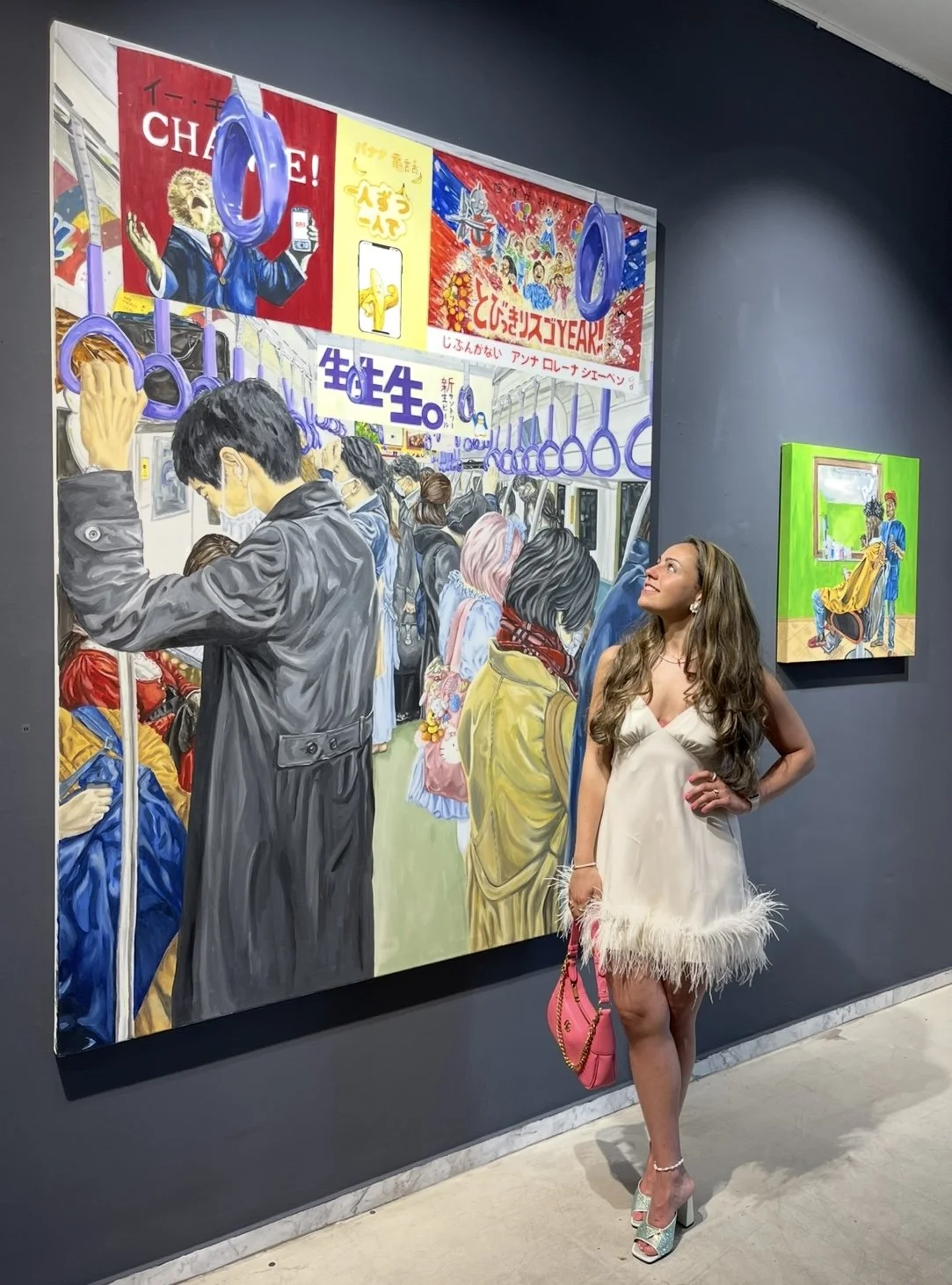
Artist & Scientist I have been drawing and painting since early childhood, long before I learned to articulate ideas through language(s). Art has always been my primary way of engaging with the world — as a form of exploration, reflection, and expression.
This early artistic practice was later deepened through formal studies in art, including abroad studies at the Centro Universitario de Arte, Arquitectura y Diseño (CUAAD) in Guadalajara, Mexico, and at Sophia University in Tokyo. During this time, I was able to explore and engage with artistic practices and techniques from Japan and Latin America as well as actively participate in group exhibitions - experiences that continue to shape my transdisciplinary approach today.
My research proposes that practices such as play, creativity, imagination, and aesthetic experience should not be relegated to the realm of infantilization or dismissed as “non-serious.” Instead, they must be recognized as legitimate and powerful forms of knowledge production.
Approaching research through artistic research does not only mean analyzing existing structures, but actively performing other ways of knowing: opening cracks in hegemonic systems of classification, destabilizing fixed epistemological hierarchies, and allowing situated, embodied, and marginal forms of knowledge to emerge.
My current PhD project therefore goes beyond examining childhood imagination as a strategy of world exploration and resilience. It seeks to foreground its epistemological potential and to place it in dialogue with artistic practice as a method in its own right. In doing so, my work challenges dominant academic frameworks and contributes to expanding how knowledge can be generated, shared, and experienced.
At the intersection of literature, art, and research, my practice emphasizes artistic processes as critical, reflective, and knowledge-producing acts. By intertwining scientific inquiry with artistic experimentation, my work advocates inclusive ways of thinking and creating — and for recognizing art and artistic research as essential practices in reimagining how we understand and inhabit the world.